

About this campaign
Looks like your text is -177 character over the limit. Please shorten it to 200 characters or less.
Looks like your text is -177 character over the limit. Please shorten it to 200 characters or less.
Every year, during the last week of July, National Moth Week celebrates the beauty, life cycles, and habitats of moths and helps spread awareness of these important insects whose global populations are rapidly declining. People of all ages and abilities are encouraged to learn about, observe, and document moths in their backyards, parks, and neighborhoods.
Join BEAT for one of our National Moth Week events and become a Community Scientist by contributing scientific data about moths! Click on the event titles below to learn more about each event.
Looks like your text is -9256 character over the limit. Please shorten it to 10000 characters or less.
Looks like your text is -190 character over the limit. Please shorten it to 200 characters or less.
Looks like your text is -190 character over the limit. Please shorten it to 200 characters or less.
Moths play a vital role in food webs. As adults and caterpillars, they are an important food item for many other species?from songbirds to amphibians to mammals and even other insects. Interestingly, moths also play a role in some bear species? diets; bears can eat up to 40,000 moths per day! They?re also crucial pollinators, especially those that are active at night. A recent study found that nocturnal moths are more efficient pollinators than bees because they pollinate more plants in a shorter amount of time, and another recent study found that moths are the second-most productive pollinator, after the bumblebee, for some plants.
Moths are closely related to butterflies, sharing the same taxonomical Order (Lepidoptera), and moths make up the vast majority of this Order. There are over 160,000 known moth species worldwide?11,000 of which are found in the U.S. In comparison, there are only about 17,500 butterfly species.
However, moths are often overlooked due to their nocturnal habits (although some moths are day-flyers) and often have drab appearances compared to the bright colors of butterflies. But there are many moth species whose colors and patterns are quite dazzling; other times, they can be so cryptic that they define camouflage. Additionally, their shapes and sizes range from as small as 2.5 mm (that?s about the width of a grain of rice!) to as large as an adult?s hand. Regardless of size or color, they?re a wonder to behold and should be appreciated for their beauty and importance to global ecosystems.
Looks like your text is -8455 character over the limit. Please shorten it to 10000 characters or less.
Looks like your text is -176 character over the limit. Please shorten it to 200 characters or less.
Looks like your text is -176 character over the limit. Please shorten it to 200 characters or less.
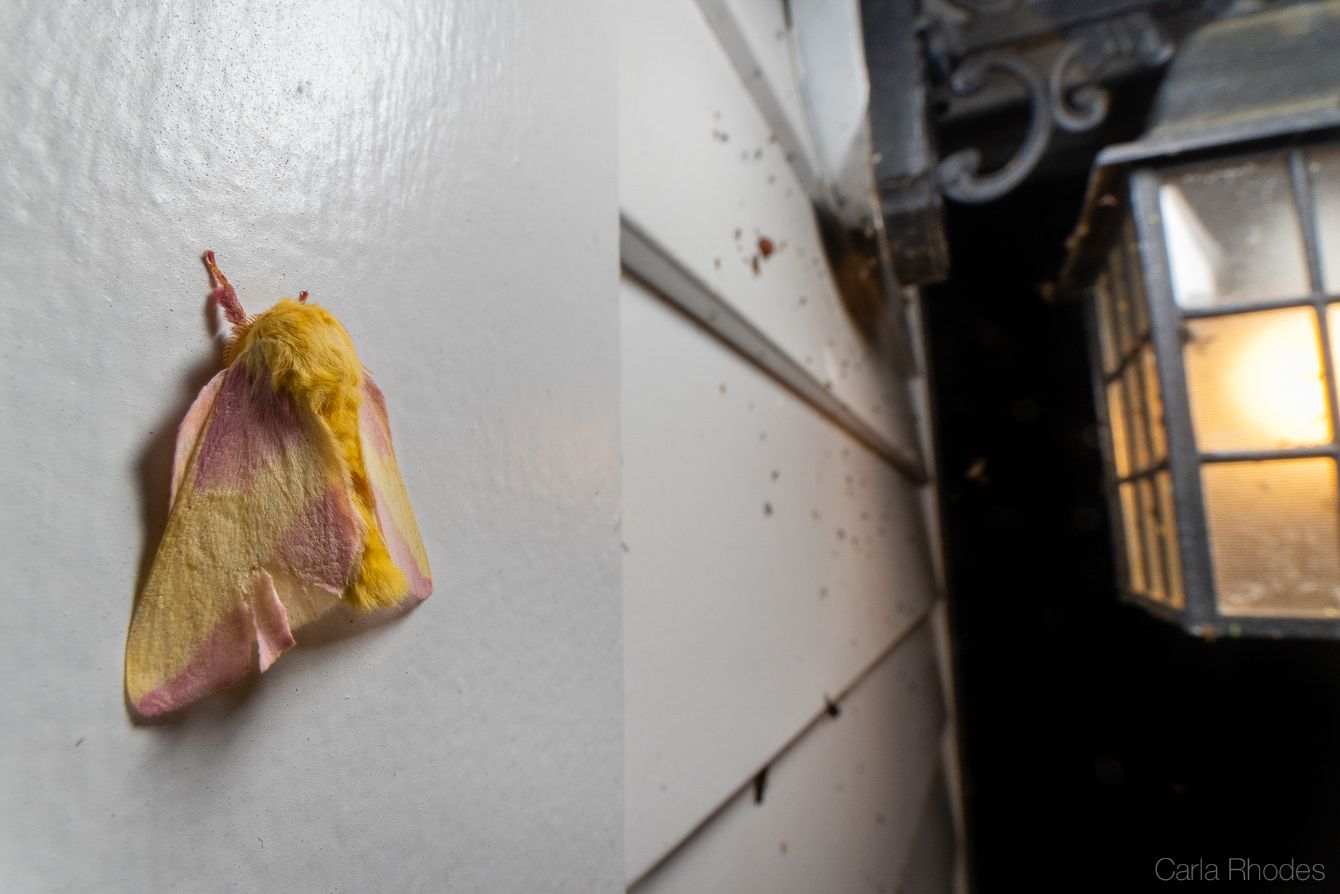
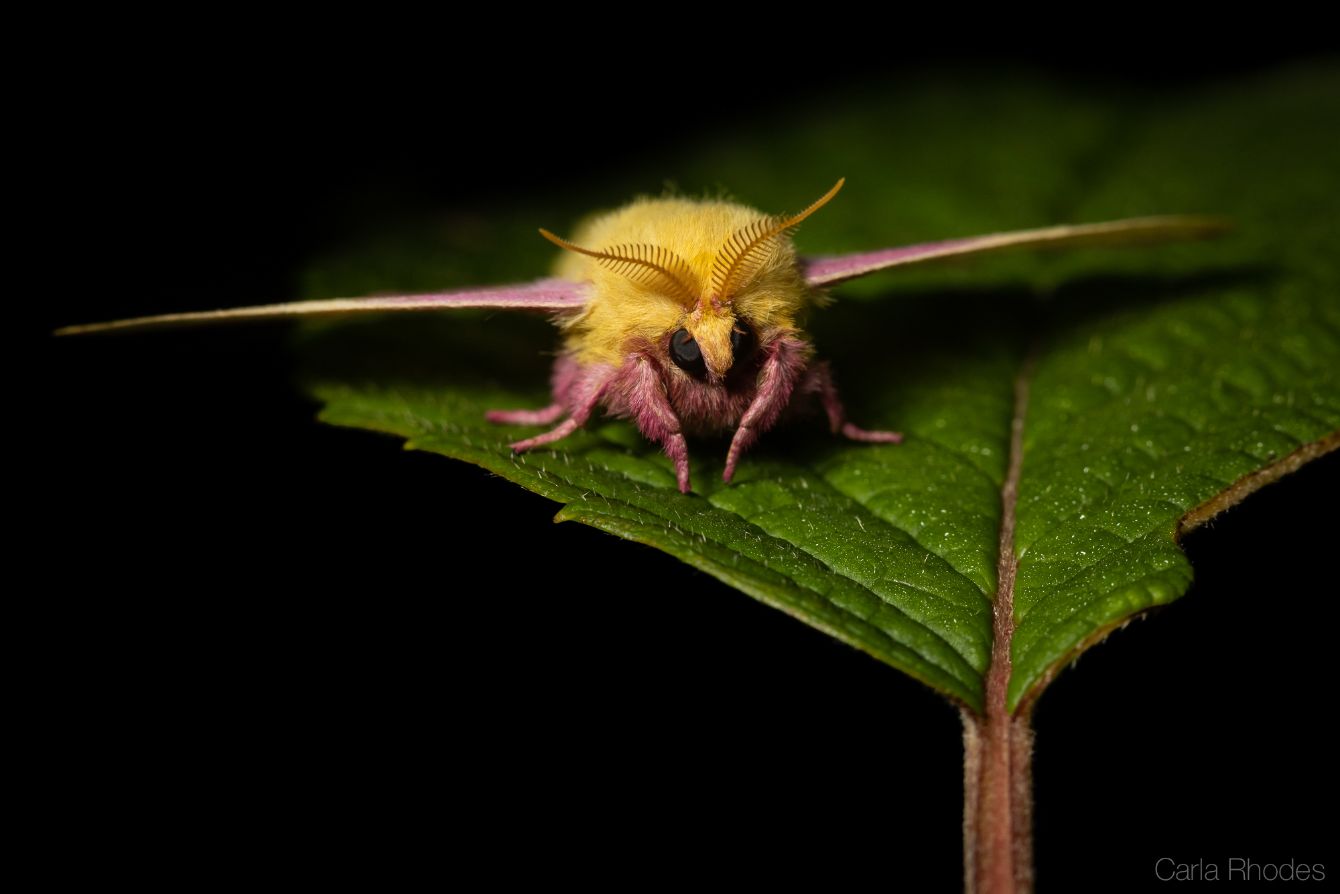
The Rosy Maple Moth (Dryocampa rubicunda) is a small North American moth in the Giant Silk Moth family, Saturniidae. It can be identified in its adult form by its various hues of pink and yellow, which are often vibrant. It?s considered the smallest of the silk moths?adults are up to 2 inches across when wings are spread, and males are smaller than females. The males have large feather-like antennae that are used to detect pheromones from the females. As an adult and caterpillar, the Rosy Maple Moth serves as a food source for many birds, including tufted titmice, blue jays, and black-capped chickadees. Other predators include parasitic flies and wasps, and predatory beetles.
By purchasing a Rosy Maple Moth t-shirt, you?ll help BEAT continue our work to protect the environment, educate, and bring awareness to the importance of wildlife?including moths! The design was hand-painted using gouache by a BEAT staff member and is printed using the direct-to-garment (DTG) method, which will keep the design from peeling as it ages and goes through washes.
Looks like your text is -8936 character over the limit. Please shorten it to 10000 characters or less.
Looks like your text is -165 character over the limit. Please shorten it to 200 characters or less.
Looks like your text is -165 character over the limit. Please shorten it to 200 characters or less.
Berkshire Environmental Action Team (BEAT) is a 501(c)(3) nonprofit located in Pittsfield, Massachusetts. Its mission is to protect the environment for wildlife in support of the natural world that sustains us all. BEAT has three major focal areas: stewardship, education & outreach, and watchdogging. Through its work, BEAT enacts meaningful change throughout Berkshire County, western Massachusetts, and beyond.
Anyone who knows BEAT will tell you that they take the ?action? part of our name seriously, and they believe an informed and empowered citizenry is the environment?s best protection. BEAT involves hundreds of volunteers every year in programs to restore, protect, and improve the condition of our woods, wetlands, and waterways. Learn more at https://www.thebeatnews.org/
Looks like your text is -9213 character over the limit. Please shorten it to 10000 characters or less.
*Photos were taken by Carla Rhodes, www.carlarhodes.com*
Sources
Yellowstone Bears Actually Eat Moths for Food | Smart NewsSmithsonian Magazinehttps://www.smithsonianmag.com ? smart-news ? yellow...
For the Love of Moths | Xerces SocietyXerces Societyhttps://xerces.org ? blog ? for-love-of-moths
MothsSmithsonian Institutionhttps://www.si.edu ? spotlight ? buginfo ? moths
Moths Are the Unsung Heroes of Pollination | Smart NewsSmithsonian Magazinehttps://www.smithsonianmag.com ? smart-news ? mot...
Moths are more efficient pollinators than bees, shows new ...Science Dailyhttps://www.sciencedaily.com ? releases ? 2023/03
Rosy Maple Moth (Dryocampa rubicunda) - [email protected] Universityhttps://hgic.clemson.edu ? Factsheets
Looks like your text is -9227 character over the limit. Please shorten it to 10000 characters or less.


