

About this campaign
Looks like your text is -166 character over the limit. Please shorten it to 200 characters or less.
Looks like your text is -166 character over the limit. Please shorten it to 200 characters or less.
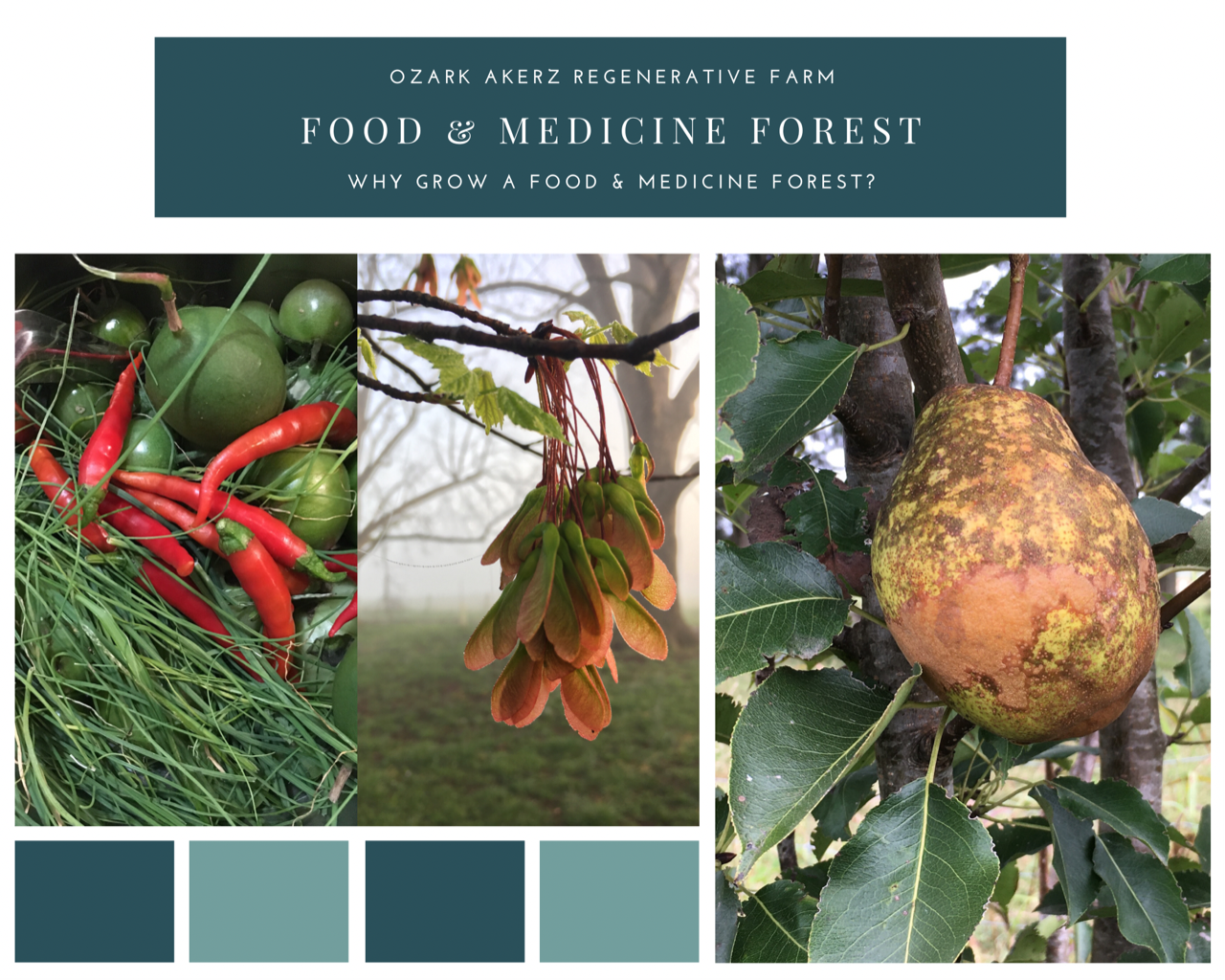
A Food & Medicine Forest attempts to mimic nature. It provides bio-diverse, perennially growing food and medicine and tools. The benefits of growing a Food & Medicine Forest range from carbon capture to self-reliance to increasing biodiversity. We started converting a small area of Ozark Akerz Regenerative Farm to a Food & Medicine Forest in 2017. We?ve allowed wildflowers and ?weeds? to grow and added native species of shrubs, trees and flowers, and perennial food plants. Our goals have been multi-fold. In no specific order, these include:
? Biodiversity: Biodiversity is a broad measure of ecological health. By planting and encouraging a wide variety of plant species, the biodiversity of insects that pollinate them increases, as does the variety of birds that feed on insects. A wide variety of plants also provides a broader habitat, food & medicine for insects, birds and mammals, including humans.
? Resilience: Varying weather patterns and disease are just some of the challenges plants must cope with. This can lead to, for example, some fruit trees varieties not bearing fruit in a season. We address this risk by planting multiple varieties of the same species of plant. We have planted 7 varieties of pears, some more disease resistant than others, some more tolerant of extreme heat. By adopting this approach, we reduce the chance of losing an entire pear crop in one season. For climate resilience, we try to choose some species like the Elaine Pear from Southern Mississippi. Plumblee Pear is a great choice for disease resitance. We also choose varieties for their innate traits, For example Kieffer Pears store well for fall and winter consumption, further reducing our grocery bills.
? Native species: Planting native species is a beautiful way to help revive traditional sources of food, medicine, and tools and improve biodiversity. Native species are generally less work to maintain once established and because they have co-evolved with other species like insects and birds, they tend to support more biodiversity. Entomologist Doug Tallamy has shown that native oak trees support over 500 species of caterpillars whereas ginkgos [sic], a commonly planted landscape tree from Asia, host only 5 species of caterpillars.[i]
? Carbon: Our Food & Medicine Forest reduces carbon emissions in two ways. First by reducing carbon-inputs like fertilizers. Each pound of fertilizer takes about 6 pounds of carbon to produce. We use ?green mulches? such as clover to fix nitrogen in the soil. We throw clover seed under each tree or shrub which help suppress weeds, maintain soil moisture, and fertilize. Second, the plants all capture carbon. Trees and shrubs capture much more carbon than your lawn does. Every 12 foot tree can sequester up to half a ton of carbon each year, even a dwarf fruit tree can sequester 200 pounds a year.[ii] Planting your trees and shrubs strategically to add shade or a windbreak can reduce the energy and related carbon emissions required to cool or heat your home. To determine how much carbon specific tree species capture check out National Tree Benefit Calculator
? 7th generation: At Ozark Akerz Regenerative Farm we respectfully and humbly add the dimension of 7th Generation as a basis for our decision-making. This value has been held by indigenous peoples of North America for millennia. According to Haudenosaunee Confederacy (Iroquois) ??the Seventh Generation value takes into consideration those who are not yet born but who will inherit the world.?[iii] This means planting and growing native trees and other plants that will provide food, habitat and medicine for the human and animal inhabitants of this land in 150 years. We are reminded of the importance of the 7th Generation value each day. We are the recipients of gifts from 2 pecan trees that were planted around 1850, over seven generations ago. Our friend Linwood Watson, a member of Haliwa-Saponi Tribe of Eastern North Carolina, put 7th Generation value into perspective for us: ?2 grandmother pecan trees at Ozark Akerz appear to be at least 150 years old. At one point the small farm anchored the trees, now the trees anchor the farm.? This is a powerful statement that inspires us to plant and care for more native trees with the intention that some will grow into grandmothers for future generations.
If you'd like tips on growing your own Food & Medicine Forest, whether you have a small backyard on an acreage, subscribe to our newsletter: https://www.ozarkakerz.com/subscribe-to-our-newsletter.html
[iii] https://www.haudenosauneeconfederacy.com/values/
[i] https://www.audubon.org/content/why-native-plants-matter
[ii] https://www.sierraclub.org/sierra/2016-4-july-august/green-life/how-put-your-yard-work-for-climate
Looks like your text is -5229 character over the limit. Please shorten it to 10000 characters or less.

