About this campaign
Looks like your text is -152 character over the limit. Please shorten it to 200 characters or less.
Looks like your text is -152 character over the limit. Please shorten it to 200 characters or less.
Why this bird? We have to start somewhere...
The bar tailed godwit (called cugerpak/teguteguaq/teguteguaq/tevatevaaq in Yup'ik and kuaka in M?ori) is the world's longest non-stop migrating bird! It was also the first bird focused on in the relationship between Paimiut Yup'ik and M?ori from Aotearoa, and the start of Children of the Sky.
The Children of the Sky is global, Indigenous-led migratory bird initiative born from the work that Yup'ik from the Southwestern Bering Sea Coast, M?ori from Aotearoa, First Nations Australian, and the many Indigenous and Allied partners from all over the world do together.
The Yup'ik come from Southwest Alaska, the birthplace of over a million waterbirds annually, some of the 37 shorebird species who breed in Alaska, and the nesting grounds of over 240 species of migratory birds who travel several of the world's flyways to get to and from the nesting grounds every year.
Currently, the Native Village of Paimiut and the Children of the Sky are working with partners in over 20 countries primarily in the Pacific Flyway, West Pacific Flyway and the East Asian Australasian Flyway. Alaska is known to be the confluence of migratory bird populations from the Pacific, West Pacific, Midcontinent / Mississippi, Atlantic, and parts of the East Asian-Australasian Flyways. Clearly, Alaska has been and still is a critically important site for the world's water and shorebirds. We hope to keep it that way.
For those who work through Children of the Sky, the world's birds are relatives, teachers and Ancestors. The world's Indigenous people have had cultural and spiritual relationships with birds since time immemorial. Children of the Sky focuses on those relationships WITH the science. Many of the Indigenous partners in Children of the Sky have been working hard to protect biodiversity by doing what they've always done. Live in relationship with the natural world. Taking care of their relatives.
Color Significance
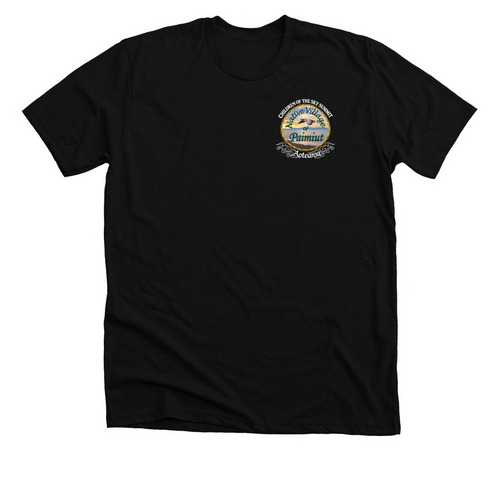
The Children of the Sky color palette was chosen with deep cultural intention. Black and ocher are traditional colors shared across both M?ori and Yup?ik worlds. Ocher carries sacred significance in both cultures: for M?ori, k?k?wai is connected to ancestral power, the earth, and ceremonial tradition; for Yup?ik People, uiteraq is a sacred red ocher associated with creation/life, ancestry, and spiritual relationship.
Ocher is also the color of the bar-tailed godwit as it takes on its breeding plumage and returns north to Alaska from Aotearoa, embodying the migratory kinship at the heart of Children of the Sky and the first migratory Kin behind Children of the Sky.
Black is likewise a powerful traditional color in both cultures. Together, black and ocher honor the sacred relationship between sky, earth, migration, and the Indigenous Peoples connected by the flight of the k?aka.
?
Te Ururangi Rowe-Ng?ti T?wharetoa, Te ?ti Haunui-a-P?p?rangi. M?ori Artist, T? Moko Practitioner, and Lead Carver, Ng? Puna Waihanga, Te Ao Hou Marae, Whanganui, Aotearoa New Zealand,
?
Te Ururangi Rowe is a M?ori carver, t? moko artist, and cultural practitioner based at Te Ao Hou Marae in Whanganui, Aotearoa New Zealand. With more than 22 years of experience in whakairo (traditional M?ori carving), he is dedicated to preserving ancestral knowledge, cultural identity, and the artistic traditions of his People.
As a lead carver at Te Ao Hou Marae, Te Ururangi contributes to the revitalization of traditional Whanganui carving styles, the restoration and adornment of the marae, and the mentorship of emerging M?ori artists. His work reflects a deep connection to whakapapa (ancestry), whenua (land), and the natural world.
Looks like your text is -6304 character over the limit. Please shorten it to 10000 characters or less.