About this campaign
Looks like your text is -31 character over the limit. Please shorten it to 200 characters or less.
Looks like your text is -31 character over the limit. Please shorten it to 200 characters or less.
Looks like your text is -178 character over the limit. Please shorten it to 200 characters or less.
Looks like your text is -178 character over the limit. Please shorten it to 200 characters or less.
The Georgia EDS & Hypermobility Network is a support community for people in the state of Georgia living with or seeking a diagnosis of Ehlers-Danlos Syndromes (EDS) or Hypermobility Spectrum Disorder (HSD). We hope to equip patients and their caregivers with information and resources to improve healthcare outcomes and quality of life. Our online presence is hosted on Facebook.
In addition to our role as a private support group, we also serve to connect with other national and international EDS authorities, groups, conferences, and the media.
Find us on Facebook at https://www.facebook.com/gaedsnetwork Prospective members should message to request to join.
Watch CNN interview our group founder Melissa Dickinson at https://www.cnn.com/videos/health/2022/12/16/ehlers-danlos-syndrome-patient-stories-contd-lon-orig.cnn
We are a nonprofit program receiving funds through the 501(c)(3) nonprofit organization Wellspring Corporation.
Looks like your text is -9054 character over the limit. Please shorten it to 10000 characters or less.
Looks like your text is -183 character over the limit. Please shorten it to 200 characters or less.
Looks like your text is -183 character over the limit. Please shorten it to 200 characters or less.
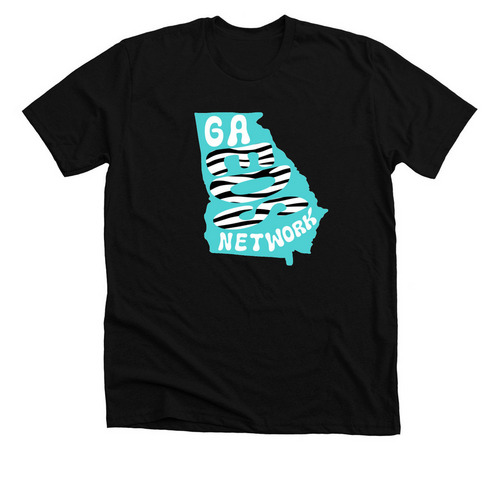
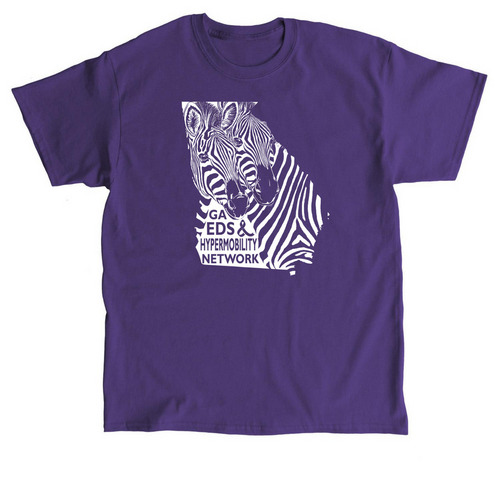
We wish to foster group pride and disease awareness through these original t-shirt designs created by our members! The design on the campaign you are viewing was created by Ari Wilson. See our store for more designs produced by our "zebras": https://www.bonfire.com/store/ga-eds/
In medical school, doctors are still taught an old adage: "When you hear hoofbeats, think horses, not zebras." This is meant to keep them from over-investigating common complaints, but it unfortunately may lead them to completely overlook and/or misdiagnose "zebras." Thus, the zebra has become a popular symbol of rare, rarely-diagnosed, and misunderstood diseases such as EDS.
Some forms of EDS are surprisingly common, but it can still take decades to be diagnosed and finally receive care due to the medical establishment's tendency to forget that zebras exist at all.
Looks like your text is -9144 character over the limit. Please shorten it to 10000 characters or less.
Looks like your text is -183 character over the limit. Please shorten it to 200 characters or less.
Looks like your text is -183 character over the limit. Please shorten it to 200 characters or less.
Ehlers-Danlos Syndrome (EDS) is a group of inheritable and incurable genetic connective tissue diseases. There are currently 13 official subtypes. In all forms of EDS, our mutated DNA is ultimately unable to support the normal formation/deposition of collagen, despite having the raw ingredients. Collagen is the most abundant protein in the human body and is often likened to the "glue" that holds it together. Other genetic connective tissue diseases (such as Marfan Syndrome and Cutis Laxa) affect different proteins but result in some similar systemic issues.
Hypermobility Spectrum Disorder (HSD) is a diagnosis applied to individuals whose symptoms satisfy many, but not all of the diagnostic requirements for EDS. Variability in disease symptoms and severity is common in all genetic connective tissue disease and complicates the ability of physicians to recognize "zebras" like us.
Ironically, our faulty collagen often results in softer than normal, even younger-appearing skin, which contributes to the outward appearance that we are healthy. For this reason, EDS and HSD are considered to be "invisible illnesses."
Healthy collagen is essential for a body to function properly. If the "glue" that holds a person together is faulty, they tend to...well, fall apart, and not just in obvious ways. This is why a person with EDS may appear to have multiple different illnesses and may even be dismissed as a hypochondriac. Due to weakness of connective tissues such as tendons and ligaments, arthritis and orthopedic problems may present at an early age, as can chronic fatigue and functional disability. Conditions such as dysautonomia, unusual allergies/mast cell disease, and certain gastrointestinal disorders are so common in patients with EDS that informed physicians recognize them as potential signs of EDS itself.
Currently, the genetic cause cannot be fixed, but damage and symptoms require careful and ongoing treatment.
All forms of EDS can create great difficulty and misery, and some can even be fatal. All of us need a community of peers to buoy us through the all-too-frequent bad times and a network of qualified physicians to help us survive. But first, we must be found. If you or someone you know in the state of Georgia may have EDS or HSD, please refer them to us. And please, support our mission! Thank you. :-)
Learn more about EDS and HSD at: https://www.ehlers-danlos.com/what-is-eds/
Looks like your text is -7571 character over the limit. Please shorten it to 10000 characters or less.
Looks like your text is -179 character over the limit. Please shorten it to 200 characters or less.
Looks like your text is -179 character over the limit. Please shorten it to 200 characters or less.
Our organization has been growing rapidly in recent years. Our entire staff consists of volunteers who themselves have EDS.
We hope to hire help, preferably a part-time, non-affected ally to help achieve our current goals.
Our goals include:
? Subscribe to basic software to efficiently manage our group resources, such as Microsoft Excel and Teams.
? Admit new members to the Facebook group in a timely manner.
? Create educational materials specific to the needs of our members.
? Manage policies and procedures to ensure accuracy of information, maintain confidentiality, and provide personalized support.
? Provide support meetings for our members (virtual or in-person).
? Increase awareness of our group and reach potential new members.
? Coordinate with other EDS groups to maximize the use of resources.
? Educate medical providers regarding EDS patients and their needs.
Looks like your text is -9079 character over the limit. Please shorten it to 10000 characters or less.