

About this campaign
Looks like your text is -98 character over the limit. Please shorten it to 200 characters or less.
Looks like your text is -98 character over the limit. Please shorten it to 200 characters or less.
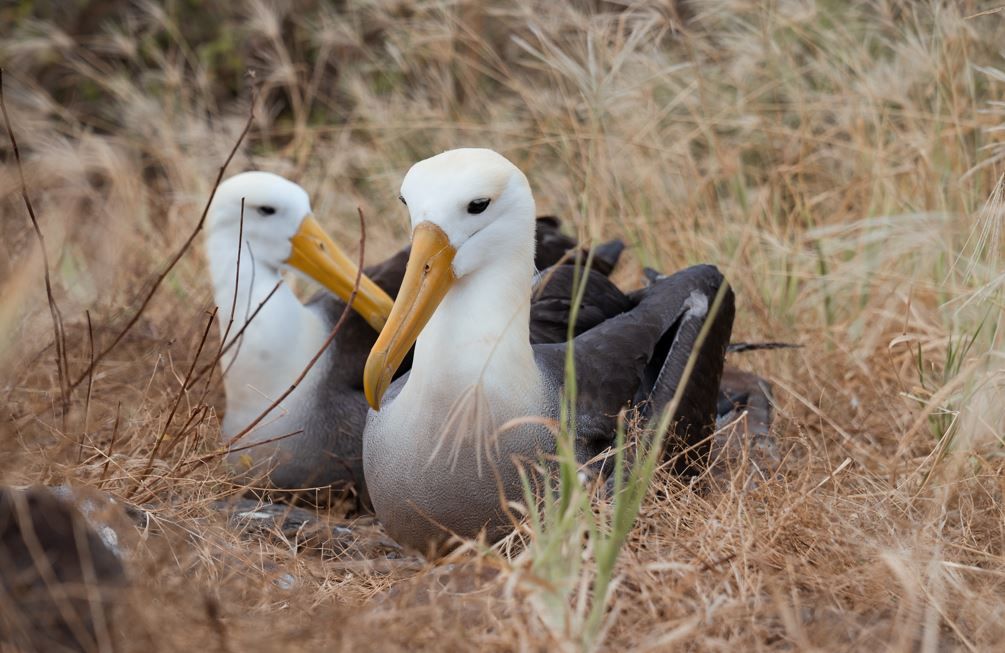
Waved Albatross are one of the various bird species in Galapagos, alongside the Galapagos Penguin and Little Vermilion Flycatcher to have a monogamous behavior. This means that they only have one partner during their mating period or even their entire life!
The Waved Albatross begin their reproduction season in April. As courtship, before mating they perform a long and complex dance that includes a rapid bill circling and bowing, beak clacking, and an upraised bill to make a ?whoo hoo? sound.
Since they are monogamous species, the female will lay one egg every year.
Looks like your text is -9425 character over the limit. Please shorten it to 10000 characters or less.
Looks like your text is -123 character over the limit. Please shorten it to 200 characters or less.
Looks like your text is -123 character over the limit. Please shorten it to 200 characters or less.
The Waved Albatross (Phoebastria irrorata) is also known as the Galapagos Albatross, a seabird endemic to Ecuador.
99.9% of the population of this species breeds on Espa?ola Island (Galapagos), and 0.1% on La Plata Island (Machalilla National Park), on the mainland coast of Ecuador. Its range extends from the Galapagos archipelago to the Exclusive Economic Zones off the coasts of Ecuador, Peru and Chile.
The Charles Darwin Foundation and the Galapagos National Park Directorate maintain, as a joint initiative, the Galapagos Albatross Ecological and Epidemiological Monitoring Program, which has been underway for more than 20 years and is led by CDF Senior Research Scientist Gustavo Jim?nez-Uzc?tegui.
On June 19, 2001 the Agreement on the Conservation of Albatrosses and Petrels (ACAP) was signed. This international agreement, of which Ecuador is a member, is an instrument that seeks to conserve albatrosses and petrels worldwide. This instrument proposes the coordination of an Action Plan to protect seabird species, and details national and international activities to achieve these objectives.
Looks like your text is -8891 character over the limit. Please shorten it to 10000 characters or less.
Looks like your text is -112 character over the limit. Please shorten it to 200 characters or less.
Looks like your text is -112 character over the limit. Please shorten it to 200 characters or less.


