You’ve got a great design. But how do you actually get it onto a shirt? The two most common methods are screen printing and direct-to-garment (DTG). While both can produce beautiful results, they have different processes, prices, and finished appearances.
Choosing the right printing method for your design and order quantity can save you money, reduce waste, and make your design look as you envisioned. This guide walks you through how each method works, what it costs, when to use it, and how to choose an option that’s right for your budget and good for the planet.
Screen printing vs. DTG
| Factor | Screen Printing | DTG (Direct-to-Garment) |
|---|---|---|
| Setup cost | Higher — charged per screen/color | None |
| Per-unit cost | Lower at high volumes (24+) | Flat rate — better for small runs |
| Design complexity | Best with 1–6 solid colors | Unlimited colors, photos & gradients |
| Durability | Very high — ink sits on fabric | Very good — improves with proper care |
| Feel on fabric | Slightly raised & textured | Soft, part of the fabric |
| Turnaround | Longer — screen setup required | Faster, especially for small orders |
| Best quantity |
24 or more
Bulk orders |
1–50
Small runs |
| Eco footprint | Higher water use in cleanup | Lower water use overall |
Bonfire uses both screen printing and DTG printing so you can launch your merch with no minimums and no upfront cost — keeping more money for your cause.
Screen printing
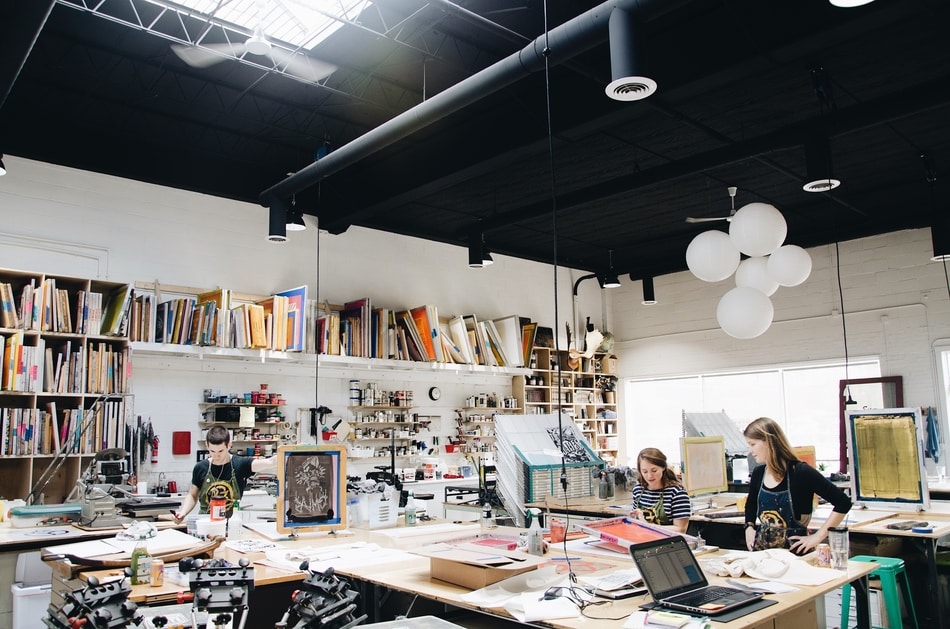
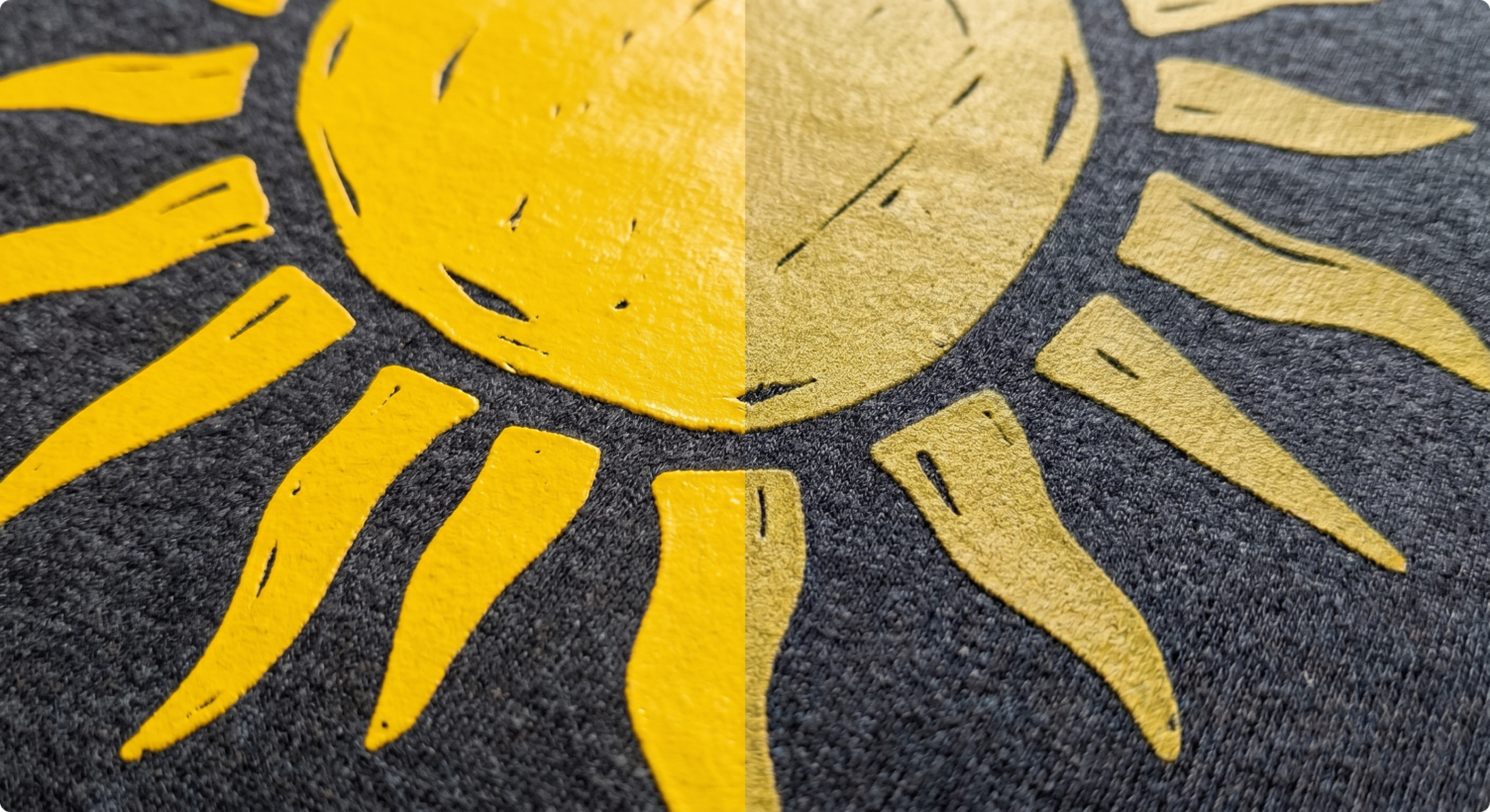
Screen printing is one of the original custom printing methods, and in the right context, it’s still the gold standard. The process involves pressing ink through a mesh screen directly onto the fabric. Each color has its own screen, which makes this option great for designs with 1-3 colors. The result is a bold, opaque print that tends to pop off the shirt in a way other methods struggle to match.
How screen printing works
- A design is separated into individual color layers.
- Each color layer is transferred onto a mesh screen using a light-sensitive emulsion.
- Ink is squeegeed through the screen onto the product, one color at a time.
- The product passes through a heat tunnel to cure the ink.
- The finished print is inspected and cooled before packaging.
Advantages of screen printing
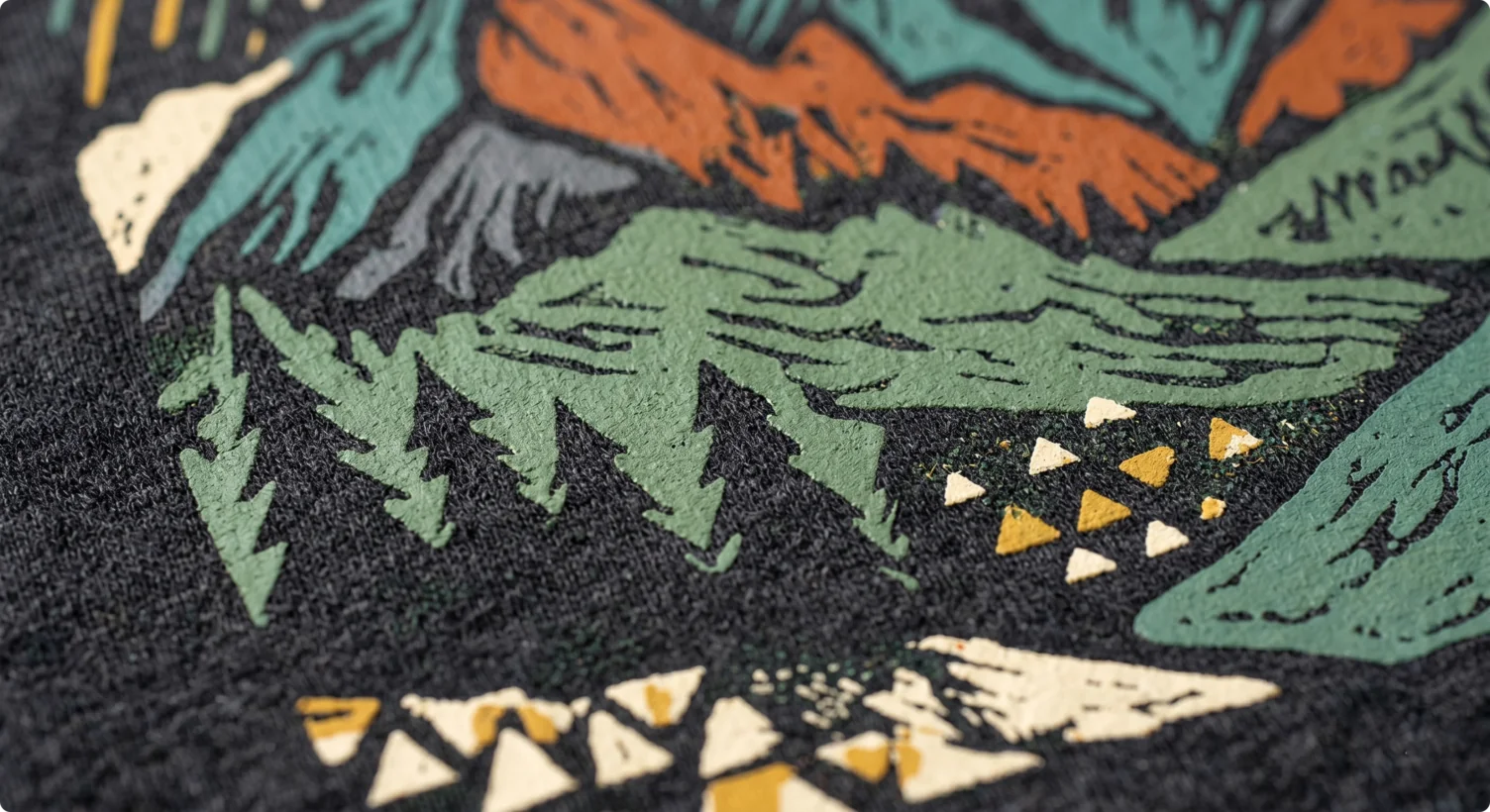
One of the primary advantages of screen printing is its ability to produce bold and vivid results. The ink sits on top of the fabric for high contrast, and colors stay vibrant through dozens of washes. It also stays consistent through different fabric types and colors, making it incredibly reliable.
For larger orders, screen printing is often the most cost-effective option. The setup costs remain fixed regardless of the quantity ordered, and the per-unit cost decreases significantly as the volume increases. Because of this, screen printing is frequently recommended for orders of 24 or more units featuring the same design.
Best use cases for screen printing
- Larger shirt orders: Ideal for bulk printing where consistency is key.
- Textured fabrics: Works well on a variety of materials.
- Fleece fabrics: Perfect for printing on warmer, thicker materials.
- Hats: A great option for headwear that requires durable prints.
- Simple, low-color designs: Best suited for clean designs with a limited color palette.
Bottom line
Screen printing remains one of the best choices for high-volume custom apparel because it delivers vibrant, durable prints at a lower cost per shirt as quantities increase. It excels when your design is simple, bold, and repeated across many items — especially on products like tees, hoodies, fleece, and hats where consistency matters.
Direct-to-garment (DTG) printing
DTG printing is a modern technique that has gained popularity for its ability to produce high-quality prints with intricate details and vibrant colors. The process involves using a specialized inkjet printer to apply ink directly to the fabric, allowing for a full spectrum of colors and complex designs. DTG is the perfect option for those looking to print a small number of shirts or high-detail prints.
How DTG printing works
- A pre-treatment solution is applied to the fabric to help the ink bind properly.
- The design is sent digitally to the printer, which renders it in full CMYK (and sometimes white) ink.
- The product is then loaded into the DTG printer, which applies the ink directly onto the fabric using a print head.
- After printing, the product is cured using a heat press or conveyor dryer to ensure the ink sets properly.
Advantages of DTG
The primary advantage of DTG printing is its ability to produce highly detailed and colorful designs without the limitations of color separations. It can easily handle full-color prints and gradients, making it ideal for complex graphics and photographs. Additionally, DTG printing has a lower setup cost compared to screen printing, making it a more accessible option for smaller orders or one-off designs.
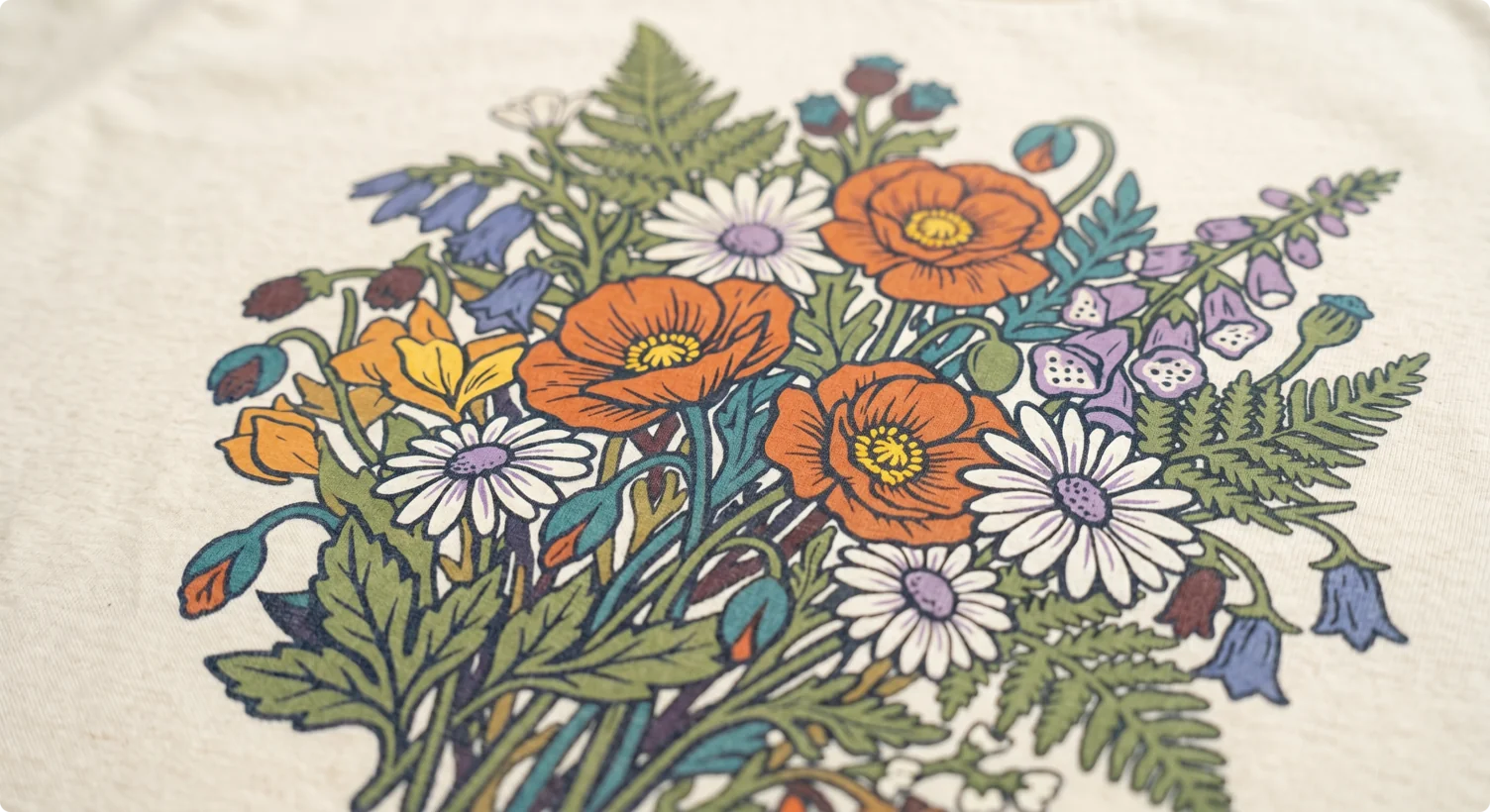
DTG also offers a super-soft feel and a quick turnaround time. Since the ink absorbs into the fabric rather than sitting on its surface, the print feels softer and more comfortable against the skin. It also offers faster turnaround for small or urgent orders and is ideal for personalization or one-off pieces.
Best use cases for DTG printing
- Small orders or one-off designs: Perfect for custom prints where quantity is not a concern.
- Complex, full-color designs: Ideal for intricate graphics, photos, or designs with many colors.
- On-demand printing: Excellent for businesses that require flexibility and quick turnaround times.
- Lightweight fabrics: Works well on cotton and cotton-blend fabrics, providing a soft feel.
- Custom apparel: Great for personalized items, such as gifts or unique fashion pieces.
Bottom line
Direct-to-Garment (DTG) printing is a great option for anyone looking to print a small number of shirts or complex designs. Its ability to handle intricate designs and vibrant colors makes it perfect for custom orders and print on-demand merch.
Sustainable printing
Whichever method you choose, it’s worth thinking about the environmental impact.
Traditional screen printing uses a significant amount of water during ink mixing, screen reclaiming, and press washdown. DTG, by contrast, tends to have a lower water footprint due to its digital, on-demand nature. If screen printing is the right fit for your project, look for a printer with a closed-loop water system — one that captures and recycles washdown water rather than sending it to the drain.
What to look for in a sustainable printing partner
When evaluating a printing partner, look for certifications and business practices that signal genuine environmental commitment. This can include:
- GOTS certified — covers the full organic textile supply chain, from fiber to finished product.
- OEKO-TEX certified — confirms no harmful substances in the final product.
- Water-based inks — lower toxicity than plastisol, easier to dispose of responsibly.
- Print on-demand — nothing is printed until it’s ordered, so there’s no overproduction waste.
- Recycled packaging — a small thing that adds up at scale.
Together, GOTS and OEKO-TEX are two of the strongest signals that a printer is operating responsibly and takes environmental responsibility seriously.
How Bonfire approaches sustainability
At Bonfire, our company was founded on the idea that we can be kinder to the earth, specifically when printing apparel. That’s why we’ve invested in more responsible production practices like water-based inks, closed-loop water systems, and on-demand printing.
These approaches can reduce water usage by up to 95% compared to traditional apparel printing methods, while also helping minimize excess waste. Print on-demand production takes sustainability a step further by only printing items after they’ve been ordered. Instead of producing large batches that may never sell, products aren’t printed until they’re ordered, so there’s no waste from unsold inventory sitting in a warehouse.
Five questions to ask before choosing a print method
Still not sure which printing method is right for your custom merch order? Work through these questions to determine your best fit:
- How many units do you need to order? Screen printing becomes cost-effective around 24+ pieces. Under that, DTG almost always wins on price.
- Does your design feature photos or gradients? If yes, DTG is the right call. Screen printing struggles with photographic detail and continuous color transitions.
- Is speed more critical than cost per shirt? DTG requires no screen setup, so it ships faster. If you have a tight deadline, that matters more than the per-unit savings.
- How important is eco-certification to your supporters? If your audience cares about sustainability, it’s worth seeking out a certified printer even if it costs slightly more. Both screen printing and DTG can be done more sustainably if the print partner prioritizes sustainability.
- Do you plan to restock the same designs often? Screen printing is cheaper to reorder in volume. DTG makes it easier to tweak designs without scrapping expensive screens.
Remember, the right method isn’t about which one is better. It’s about which one best fits your needs.
How Bonfire takes the guesswork out of choosing the right print method
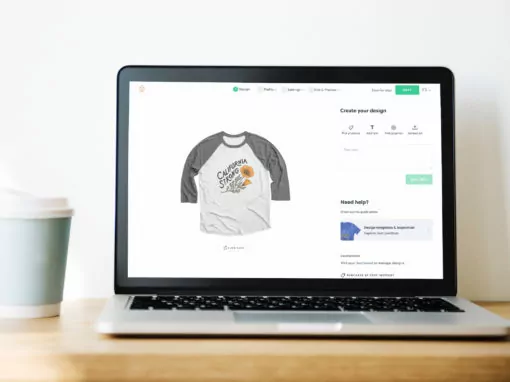
At Bonfire, we use both screen printing and DTG, and we automatically route your order to the right method based on your design, quantity, and timeline. You don’t need to understand the technical differences to get a great result. Just upload your design, set your quantity, and we handle the rest.
Every order is printed on GOTS- and OEKO-TEX-certified blanks using water-based inks, and our print on-demand model means nothing goes to waste. Whether you’re printing five shirts for a family trip or five hundred for a fundraiser, we’ll get you the best quality at the best price and in the most sustainable way.
Frequently asked questions
Both print methods will hold up through washes using our suggested care tips. Screen printing tends to be more durable over time because the ink sits on top of the fabric and bonds through heat curing. DTG prints can fade faster if washed in hot water or dried on high heat, so we recommend washing inside-out in cold water.
DTG works best on 100% cotton. Polyester and synthetic blends can be problematic because the pre-treatment solution doesn’t absorb as well. Screen printing is generally more versatile across fabric types.
Most printers require a minimum of 24 pieces per design for screen printing to be cost-effective. With Bonfire, there’s no hard minimum, as we pick whichever method is a better value for your quantity. This ensures you’re getting the best price when ordering in bulk or making the highest possible profit when selling through a campaign.
Yes, it is! The biggest source of waste in apparel is overproduction. When shirts are printed only after they’re ordered, there’s no unsold inventory, no warehouse storage, and no excess that ends up in a landfill. Combined with certified inks and blanks, it’s significantly better for the environment.