At Bonfire, we know that custom merchandise can be a game-changer for your nonprofit. Selling custom products can transform your fundraising strategy, engage your supporters, and sustain your impact year-round.
From choosing the right products to telling a story with your merch, we’ve got you covered. This guide covers the top strategies you need to create custom merch that aligns with your mission and resonates with supporters:
- Choose Products Your Supporters Will Love
- Create a Design That Reflects Your Mission
- Experiment With Visual Storytelling
- Follow Design Best Practices
- Take Advantage of Design Resources
1. Choose Products Your Supporters Will Love
When selecting the products for your campaign, prioritize choices that will resonate with your audience. You can create the perfect design, but it must be placed on merchandise that your supporters actually want or need.
By showing you understand your supporters’ needs and preferences, you not only boost engagement and purchase likelihood, but also inspire them to share your campaign.
Follow these strategies to choose products that your community will want to own:
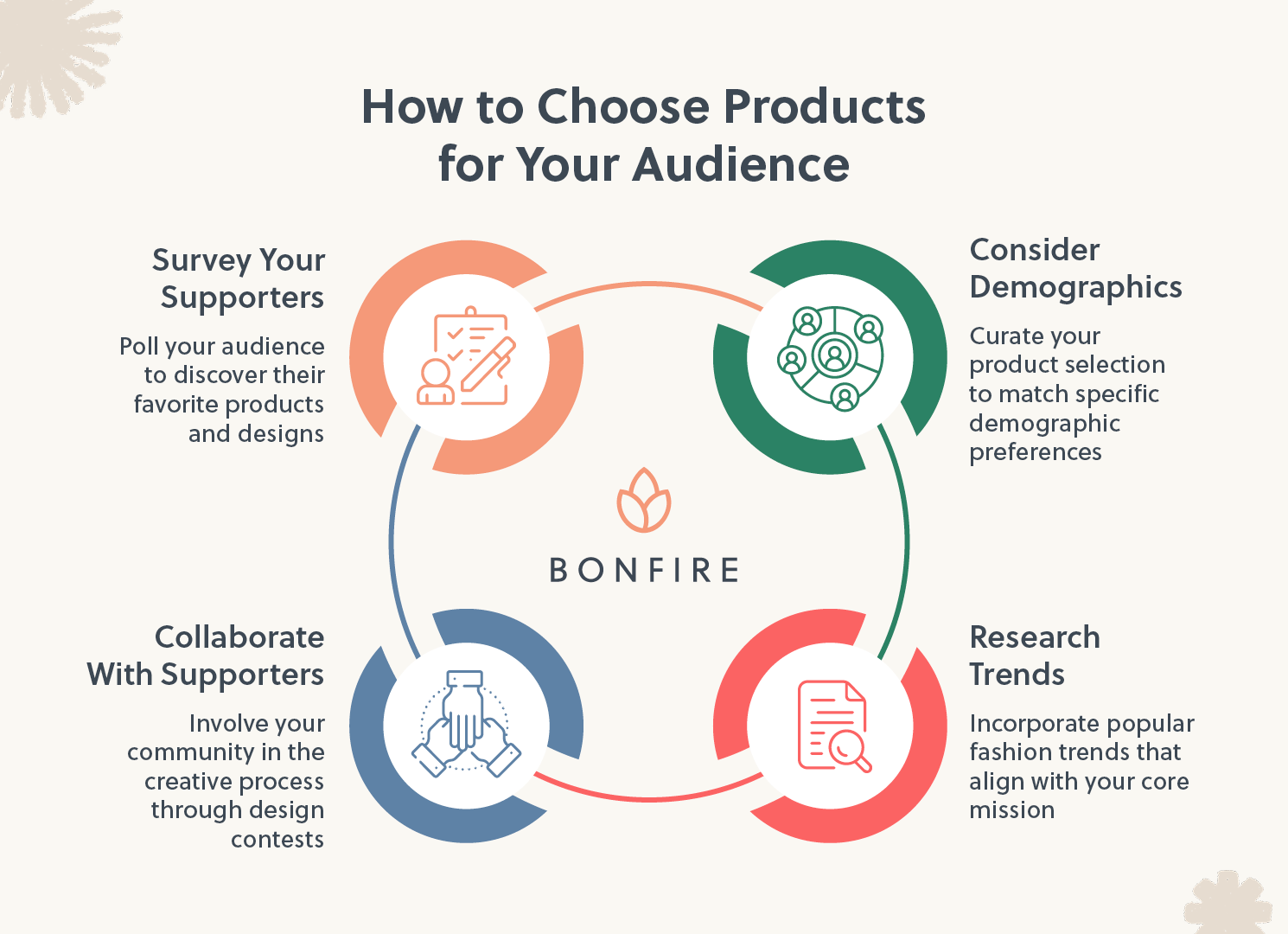
- Survey your supporters: Conduct surveys or polls to learn about your audience’s preferences. Ask them what types of merchandise they would be interested in, what colors they’d like, etc. You can even ask what designs or slogans they’d like to see.
- Consider demographics: Different age groups and demographics may have varying preferences for merchandise. For instance, younger demographics may want trendy tote bags, while older donors could prefer coffee mugs. Curate your product selection to match your target audience’s interests.
- Research trends: Stay informed about current fashion and merchandise trends. Look at what’s popular and consider how those trends align with your nonprofit’s mission and values.
- Collaborate with supporters: Involve your supporters in the creative process. Host design contests or ask your community for ideas. This way, you ensure your merchandise fits their interests.
2. Create a Design That Reflects Your Organization
When creating merchandise, your design is about more than aesthetics. It should echo your mission and stand out to supporters.
You can create designs that align with your nonprofit’s core values by:
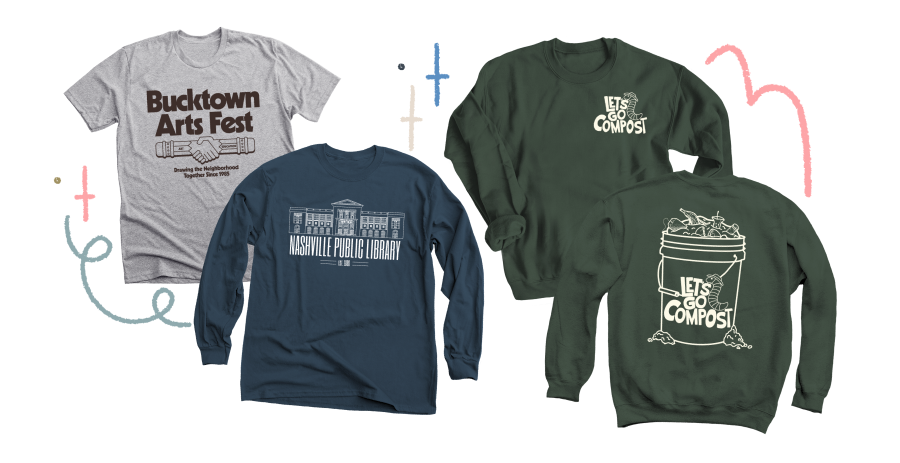
- Creating a consistent visual identity. Be consistent with your visual branding elements, including logos, color schemes, fonts, and imagery. These elements reinforce your nonprofit’s identity and build trust and recognition among your supporters.
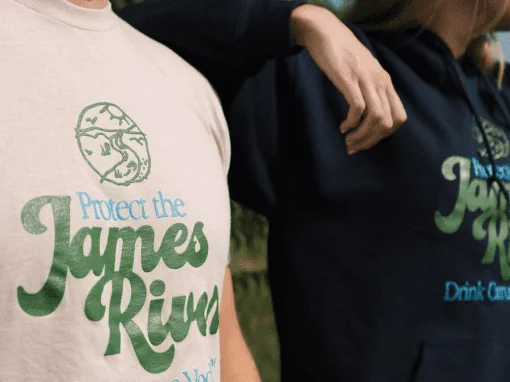
- Establish an emotional connection. Custom merchandise gives you an opportunity to communicate your nonprofit’s mission in a powerful visual format. By creating a design that evokes an emotional response, your nonprofit is more likely to see supporters actively engage, contribute, and advocate for your cause. For example, your merchandise might feature a powerful quote or slogan, or include artwork created by a beneficiary.
- Aim to make a long-term impact. People who purchase and wear your merchandise become long-term advocates for your cause. Use comfortable, high-quality fabrics to increase the chances that supporters will wear your designs for years to come. Unless your merchandise is meant to commemorate a specific event, avoid adding specific dates or years to ensure each item remains a timeless, everyday staple.
3. Experiment With Visual Storytelling
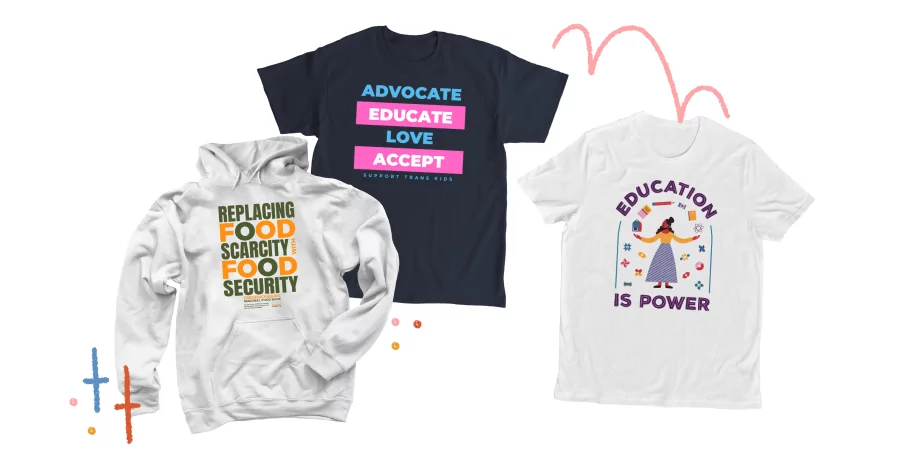
Your merchandise’s visual designs should tell a powerful story about your mission. To weave a compelling narrative around your merchandise, try these tactical approaches:
- Connect the product type to the cause: Choose items that complement your organization’s mission and story. For example, an environmental group could sell reusable organic totes to reinforce its sustainability narrative, while a homeless shelter might sell warm winter beanies to create an immediate, logical link in the buyer’s mind.
- Use visuals to show, not tell: Instead of explicitly spelling out what your organization does with words, use imagery or graphics that represent the outcome of your work. If your nonprofit helps people transition out of poverty, you might feature a design with an open door, ascending steps, or a rising sun that tells a story of hope and progress.
- Incorporate URLs or QR codes for deeper engagement: Add a short URL or a small, subtle QR code on the back of a collar or sleeve that links directly to a short video, beneficiary interview, or landing page with an impact story. This makes it easy for supporters to discuss your cause with friends and family.
4. Follow Apparel Design Best Practices
Even if you aren’t a professional graphic designer, you can still create appealing, clean designs by considering these basic apparel design best practices:
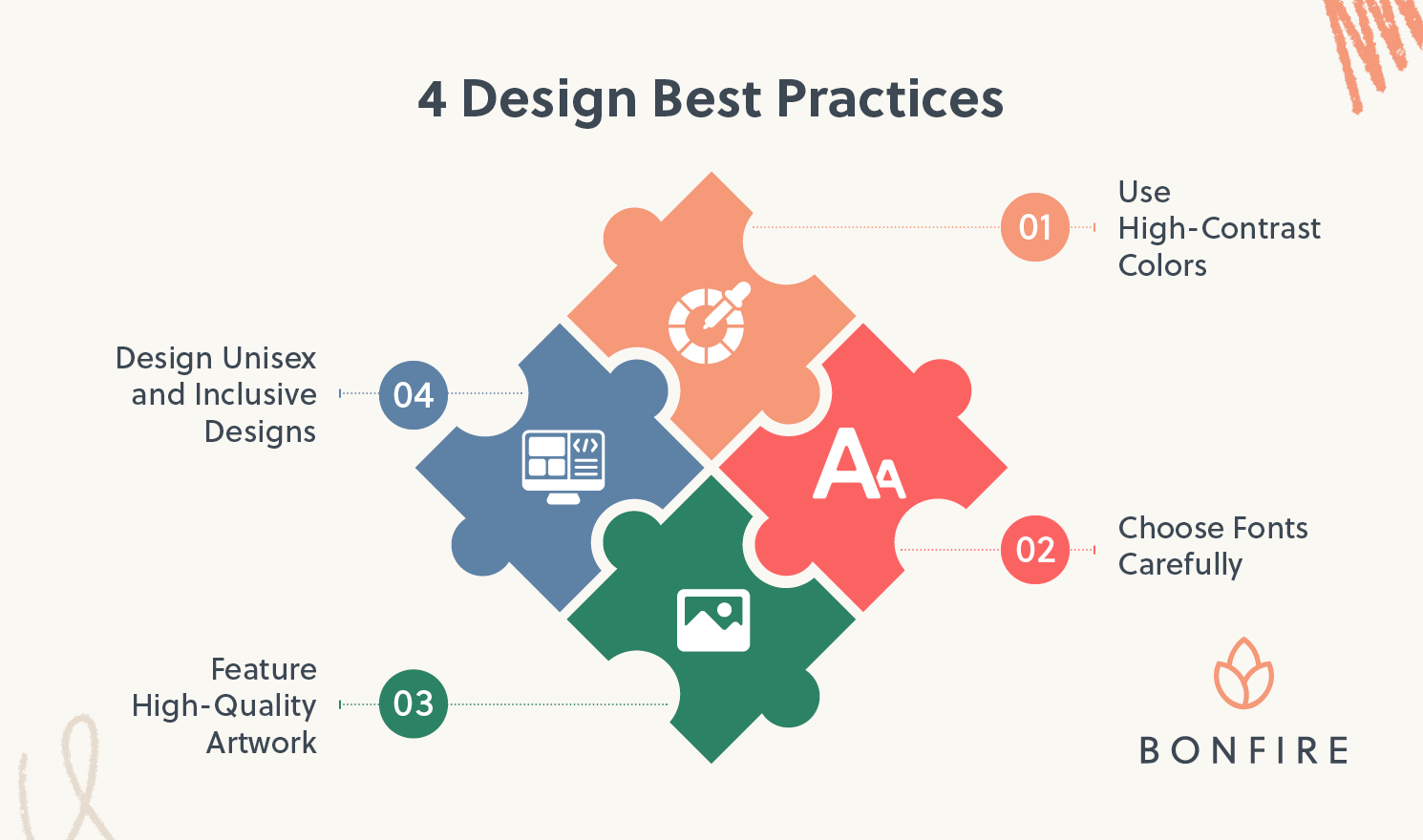
- Use high-contrast colors: High-contrast color combinations make your merchandise stand out and ensure text is easy to read. It can be as simple as putting a dark design on a light shirt (and vice versa) or using colors that are opposite each other on the color wheel.
- Choose fonts carefully: Select legible and complementary fonts, and avoid using more than two to three fonts per design. All text on your merchandise should be easy to read and visually connect with your mission. Also, use text size to establish a visual hierarchy: campaign slogans should be the largest, while details like your website URL should be smaller.
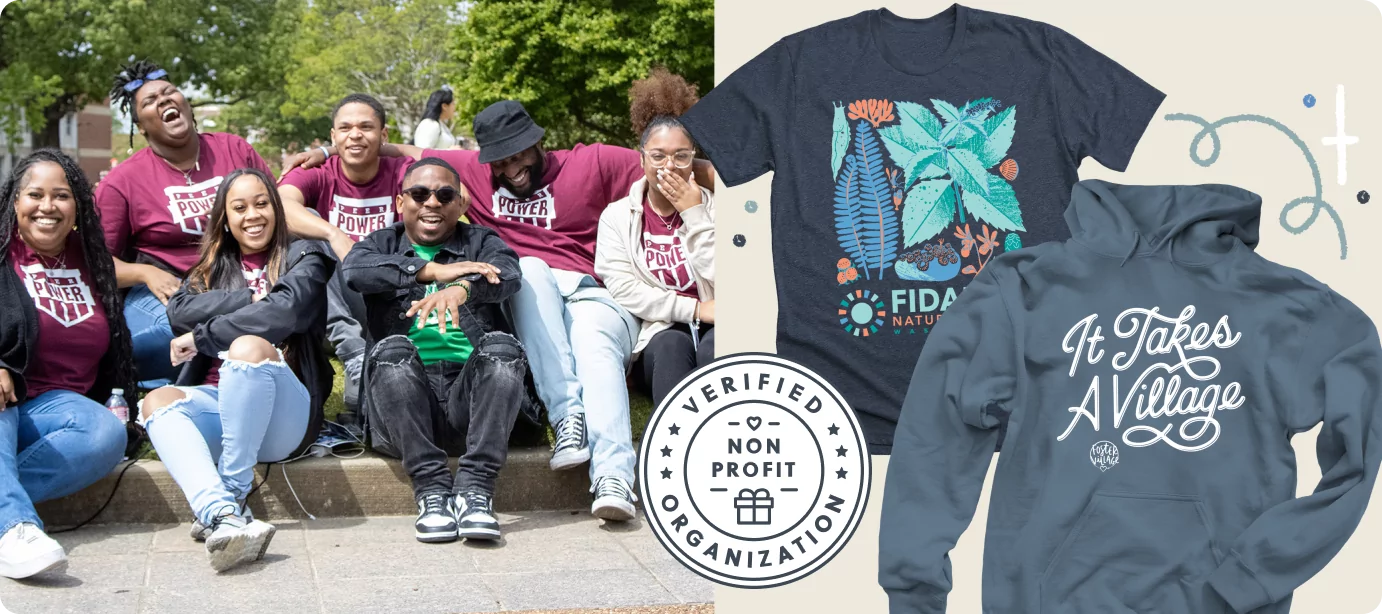
- Feature high-quality artwork: Invest in high-quality artwork and graphics. Platforms like Bonfire offer pre-made templates that nonprofits can customize, helping organizations create high-quality designs while saving on costs.
- Design unisex and inclusive designs: Create designs that are inclusive of all genders and age groups to expand your potential customer base.
Keep in mind, these are not rigid rules you have to follow. Use these best practices to guide your designs in early iterations, but don’t be afraid to experiment as you get more comfortable with designing custom merch.
5. Take Advantage of Design Resources
Designing your own merch doesn’t have to involve a steep learning curve or a team of graphic designers. But if you feel overwhelmed or staring at a blank digital canvas, resources can help you navigate the process.
First, consider using pre-made, customizable templates to jumpstart your design. For instance, Bonfire has over 800 design templates to choose from. These polished templates are created by talented designers, giving you a solid foundation to add your organization’s unique spin.
Another option is to work with a professional graphic designer. At Bonfire, you can be paired with a designer from our concierge design service, Bonfire Studio, to bring your vision to life.
Check out this quick overview to see just how simple it is to launch a t-shirt fundraiser on our platform:
Creating nonprofit merchandise is a powerful way to generate support for your cause, increase awareness, and raise much-needed funds. By understanding your audience, designing compelling and meaningful products, and telling compelling stories through your designs, your merchandise can resonate with supporters and make a lasting impact on your mission.